

January 2026
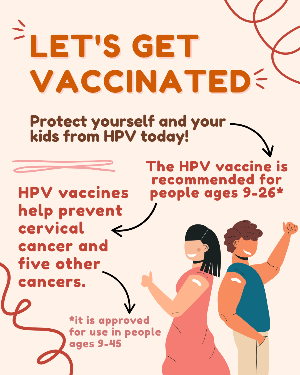
One Dose of HPV Vaccine Effective
Human Papillomavirus (HPV) is extremely common; about 1 in 8 people have it at any given time, and roughly 80% of sexually active adults will be exposed during their lifetime. While most infections clear on their own, HPV can cause chronic inflammation that leads to cancer. HPV is responsible for nearly all cervical cancers, over 90% of anal/rectal cancers, and about 70% of throat cancers. It also causes genital warts.
Only about 10% of people who acquire HPV develop a long-term infection, and 1–20% of those persistent infections progress to cancer, depending on the HPV type. Importantly, about 99% of HPV-related cancers and genital warts are preventable with vaccination.
The standard recommendation has been a two-dose series for ages 9–14 and a three-dose series for those 15 and older. But what if someone didn’t complete the full series?
A recent 5-yearstudyof adolescents in Costa Rica found that one dose of the HPV vaccine was just as effective as two doses at preventing overall HPV infection—and crucially, showed no increased risk of HPV types 16 and 18, which cause over 70% of HPV-related cancers. Two doses were only significantly more protective for HPV type 31, which accounts for about 4% of HPV-related cancers.
Dr. Neuman says: “Based on this study, I now recommend that patients receive at least one HPV vaccine if they are ages 9–26, or age 27+ and sexually active. While two or three doses are still ideal, getting even one dose provides substantial protection and is far better than none.”
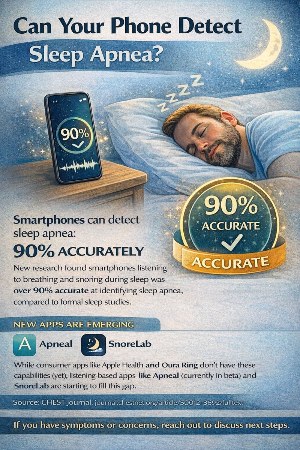
Can your phone detect sleep apnea?
Folks often ask whether data from Apple Health, Oura Ring, or snoring apps can tell them if they have sleep apnea. Until recently, the answer from me was “I'm not quite sure.”
A new study found that smartphones listening to breathing and snoring during sleep was over 90% accurate at identifying people who had sleep apnea, when compared to formal sleep studies. The researchers used three specialized listening algorithms and found that accuracy improved the longer the device collected data.
While these exact algorithms are not yet built into consumer apps like Apple Health or Oura, similar tools are emerging. Apneal (currently in beta) and SnoreLab are the closest available options on the market.
Dr. Neuman says: "Listening-based sleep tracking is becoming a promising screening tool, but it does not replace a formal sleep study (at least yet). If your app suggests possible sleep apnea, or you have symptoms like loud snoring, daytime sleepiness, or morning headaches, let’s talk about next steps."
Even Small Amounts of Exercise Can Slow Cognitive Decline
A recent study published in Nature Medicine followed 296 adults (average age 72) for 10 years and found that those who walked more than 3,000 steps per day had 40–54% less cognitive decline compared to those who walked less. Exercise was associated with less accumulation and less aggressive behavior of tau protein, a hallmark of Alzheimer’s disease. Interestingly, walking beyond 5,000–7,500 steps did not appear to provide additional benefit, suggesting a possible ceiling effect. Beta-amyloid plaque accumulation was unaffected by exercise.
Dr. Neuman says: "This study cannot prove causation. It's possible that participants with faster cognitive decline were less able to walk. Controlled trials and meta-analyses of other conditions suggest that even small amounts of exercise can have meaningful benefits. For example, multiple studies show that modest exercise, including walking, yoga, or strength training, can improve depression and overall brain health.
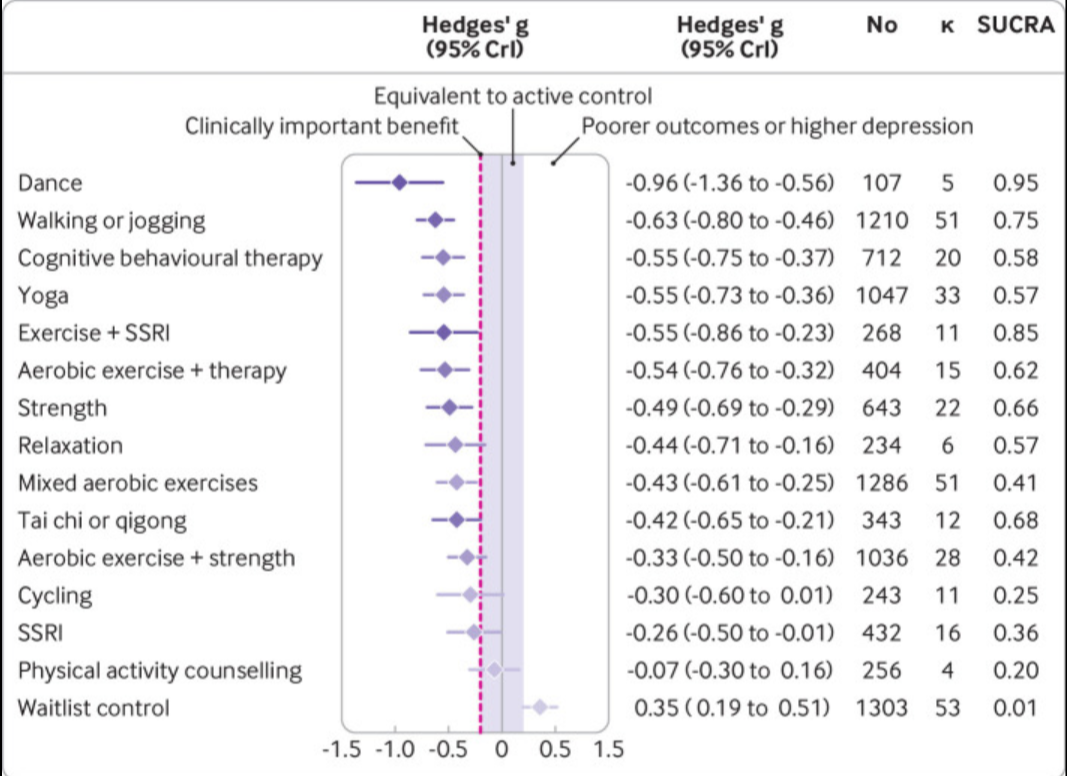
This study reminds me of one of my favorite studies, a meta-analysis (a composition of multiple studies. A metaanalysis is one of the highest reliability levels of data), which showed that even small amounts of exercise can help to treat depression (see table below). Strength training and yoga were the most popular among study participants for helping with depression. Studies like this, that are controlled trials with placebos, can help me bet that the results of exercise slowing cognitive decline from the above study are at least in part causation, not correlation."
