

March 2026

Caffeinated Coffee and Tea Associated With Lower Dementia Risk
Encouraging news for caffeinated coffee and tea enthusiasts! A large, long-term newstudyshowed an 18% lower risk of dementia among individuals who drank the highest amounts of caffeinated coffee and tea compared to those who drank the least. Reaserchers found the most pronounced protective effect at 2-3 cups of caffeinated coffee or 1-2 cups of tea daily. Interestingly, non-caffeinated coffee did not have the same protective effect. This study followed 100,000+ folks for 42 years, making this a big milestone study in dementia protection medicine.
Dr. Neuman says:“This was observational rather than a randomized trial, which means it shows an association but cannot prove causation. It's possible folks who drink caffeinated coffee or tea also exercise more, or eat less/better, or do some other health behavior that is protective. For now, for those who tolerate caffeine well without worsening anxiety, stomach symptoms, or insomnia, a moderate amount of caffeinated coffee or tea seems like a beneficial choice."
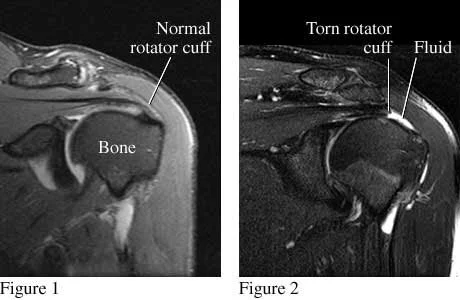
Most Adults Over 40 Show Rotator Cuff Abnormalities on MRI
The rotator cuff is a group of four muscles, the supraspinatus, the infraspinatus, the teres minor, and the suscapularis, and their tendons, which attach the muscle to the humurus. Rotator cuff tears are a common cause of shoulder pain. When folks present with significant weakness, severe pain, or persistent symptoms despite activity modification and physical therapy, we typically get an MRI.
We'd like to assume that what we find on MRI is the source of pain.
However, a new study out of Finland calls that assumption into question. The study looked at shoulders of adults in Finland aged 41-76. They found similar abnormalities no matter whether folks had symptoms or not. 96% of participants without symptoms had an abnormality on MRI in their rotator cuff, compared to 98% of folks with symptoms.
Dr. Neuman says: "This was a study of only Finnish adults, so these results may not be generalizable to everyone. Hard to know if what we find on the MRI is the source of the pain when 96% of people may have abnormalities at baseline. MRI of the shoulder might still be a useful tool for folks who are undergoing sugical consultation, as the MRI helps guide operation planning."
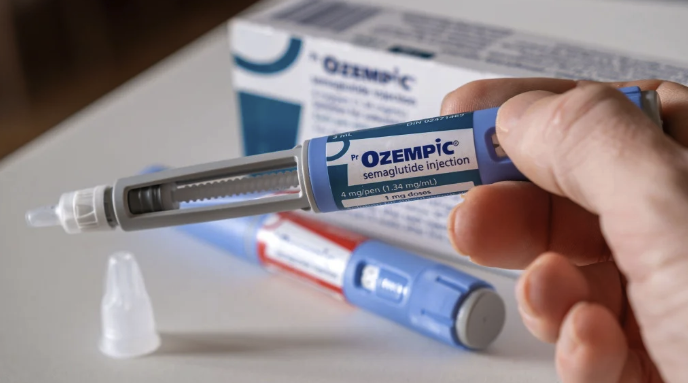
Weight Regain Post-GLP1
Many folks wonder what happens with weight after stopping a GLP1 like semaglutide (Wegovy, Ozempic, Rybelsus) or tirzepatide (Mounjaro, Zepbound). The SURMOUNT-4 trial followed 308 people up to one year after stopping.
17.5% regained between 0% and 25% of weight lost
25% regained 25-50% of weight lost
33.4% regained 50-75% of weight lost
24% regained more than 75% of weight lost
The amount that disease markers like hemoglobin A1c for diabetes, cholesterol, and blood pressure increased was proportional to the weight gained back. Even folks who maintained the greatest weight loss still saw increases in blood pressure by 6.8 points sytolic, 1.6 points diastolic.
Dr. Neuman says: "GLP-1 meds have been life-changing for so many. It's disappointing that the full benefits are often not maintained after stopping as this makes the decision to discontinue therapy a challenging one."
Pain Reprocessing Therapy for Pain, Fatigue, and Mental Health in Central Sensitization Syndromes
For over 85% of people with longterm back pain, no clear structural problem is found. This is also common in TMJ disorder, migraines, fibromyalgia, IBS, and chronic bladder pain syndrome. The pain is real but evolves from a direct signal at the site of injury to a threat-detection signal in the brain and nerves, a process called central sensitization. This process can lead to spreading pain, fatigue, depression, body sensation hypervigilance, and anxiety/depression.
Treatment is challenging. Nerve pain medications. graded exercise, physical therapy, acupuncture/dry needling help some people, but many remain with pain and its related symptoms.
A landmark study from 2021 paved the way for Pain Reprocessing Therapy (PRT), an eight session course that:
-teaches what central sensitization is
-goes over reasons why folks may have this (like normal or nonspecific MRI or nerve-muscle tesing results)
-goes over pain-fear cycle, where pain triggers feelings of fear which puts the brain on high alert causing more pain
-goes over techniques to address difficult emotions
-shows ways to increase positive emotions and self-compassion
-guides people into body positions they thought brought out pain and reassures them that even though the signal of tightness/burning is there, the body nevertheless is safe
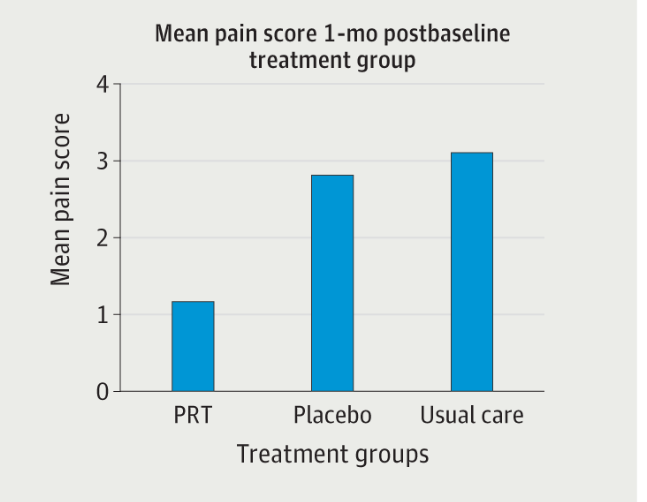
44% more people were pain-free after completing this course (66% vs 20% placebo group over one month).
A highly anticipated secondary study just released showed improvements in anxiety, depression, and fatigue alongside pain reduction in PRT.
Dr. Neuman says: "If you'd like a PDF on the PRT therapy technique, please reach out. There are many qualified PRT practitioners in our area. Check out Beth Perlmutter at https://secondarrowcounseling.net/. Remember, this technique is for central pains, and not peripheral pains, such as an acute fracture."
