

April 2026
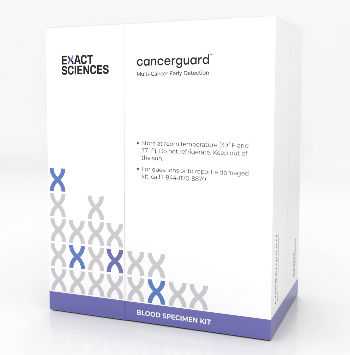
Now offering Cancerguard
Cancerguard is a new multi-cancer early detection blood test from Exact Sciences (the makers of Cologuard). CancerGuard identifies cancers that lack routine screening by detecting methylated DNA and tumor marker proteins in the blood. Results come back as either "cancer signal found/not found." If a cancer signal is found, then the person is encouraged to follow up with a whole-body PET-CT scan. Faithful newsletter readers may remember that we also offer the competitor test, Galleri, though Cancerguard touts a slightly higher accuracy.
Dr. Neuman says: “This test is not FDA-approved or insurance-covered, and long-term studies showing that this test keeps people alive longer are lacking. The test has a specificity of 97.4% for advanced cancers, meaning a negative result is quite reassuring for many cancers that are otherwise hard to catch early, including pancreatic, stomach, liver, bile duct, esophageal, colorectal, and lung cancers. For the right person, it may offer meaningful peace of mind. The biggest risk is that 1 in 40 people are told 'cancer signal found' when no cancer exists.
The test costs $689, and is discounted to $350 with an assistance program for many. For details on which cancers are included and their detection rates, see page 5 of the CancerGuard fact sheet."
Low-fat or low-carb?
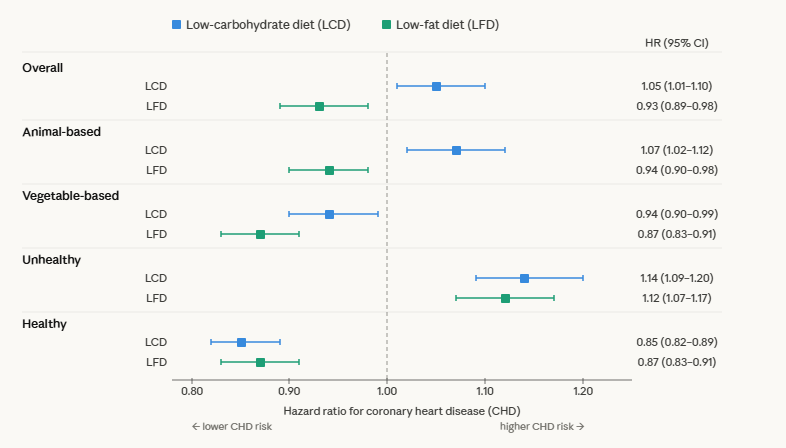
An impressive new study reviewed what folks ate and found that the type of approach mattered more than whether it was low-fat or low-carb. Types of diets that produced higher levels of pro-inflammatory metabolites (byproducts of digestion) in the body, commonly found in processed meats, processed sugary items, refined flours, red meat, and high-fat dairy, had a 34% higher heart attack/disease risk in low-carb diets and a 29% in low-fat diets compared to lower pro-inflammatory diets.
Dr. Neuman says: "This study is interesting because it means that how one achieves a low-fat or low-carb diet may matter more than which diet is chosen. This study still did not answer my most pressing question of which Lacroix flavor is best for heart disease prevention."
GLP-1s Didn't Slow Alzheimer's Progression
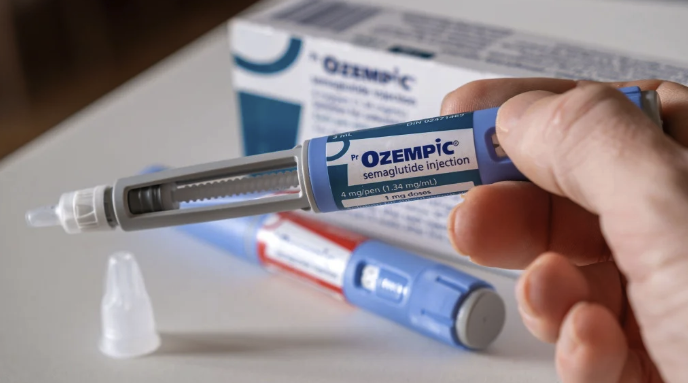
A study of 4,000 adults with early Alzheimer-related memory loss disease found that taking oral semaglutide (a GLP-1) daily for two years did not slow cognitive decline.
Dr. Neuman says: "This study was limited to folks with known memory loss from already diagnosed Alzheimer's. We still don't know whether earlier administration of GLP-1 prevents cognitive decline. It is also worth noting that the overall GLP-1 dose was low in this study. We also don't know about different types of memory loss, like post-stroke or Parkinson's. For now, I won't be recommending starting GLP-1s for slowing Alzheimer's dementia progression.
Psychedelics for Depression: A Mixed Picture
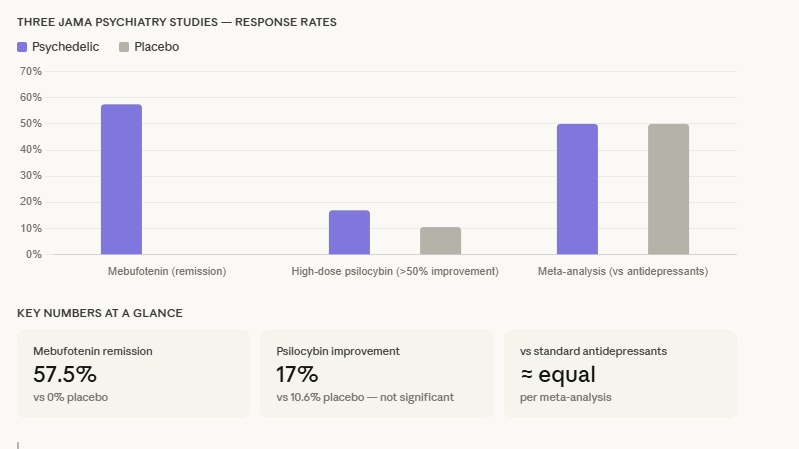
Psychedelics like psilocybin (active compound in magic mushrooms) are a hot, but complex, research area for PTSD and depression. Three major studies published in JAMA Psychiatry within a single week demonstrate this complexity:
A one-day treatment with an inhaled study psychedelic (mebufotenin, aka GH001) showed a 57.5% depression remission rate compared to 0% of the placebo group.
17% of adults who received two treatments with high-dose psilocybin showed > 50% improvement in depression six weeks vs. 10.6% in the placebo group. This amount of difference was not enough to call it significant.
While these studies seem promising, their efficacy is questionable, as participants can generally predict whether they received psilocybin or a placebo in research trials, making it hard to know whether there is a placebo effect. In other antidepressant trials, the placebo effect size is about 30%.
And indeed, a meta-analysis showed that when unblinding both standard antidepressants and psilocybin (telling folks they got the active ingredient), the difference in effect between psilocybin and standard antidepressants goes away.
Dr. Neuman says: "There are still so many unanswered questions regarding psychedelic treatments: who are the best candidates? What are risk factors for bad experiences? What dose is optimal? Which type of psychedelic? How often? For how long?
For now, I will recommend psychedelic therapy to those who are not at risk of addiction or drug-drug interactions and have not found success with standard antidepressants and talk therapy."
